Map the Block › Data › Gun laws
Red Flag Laws by State (Extreme Risk Protection Orders)
Which states let a court temporarily remove guns from someone found to be a danger.
As of October 6, 2026: No red flag law: 28 states; Red flag law: 22 states and DC.
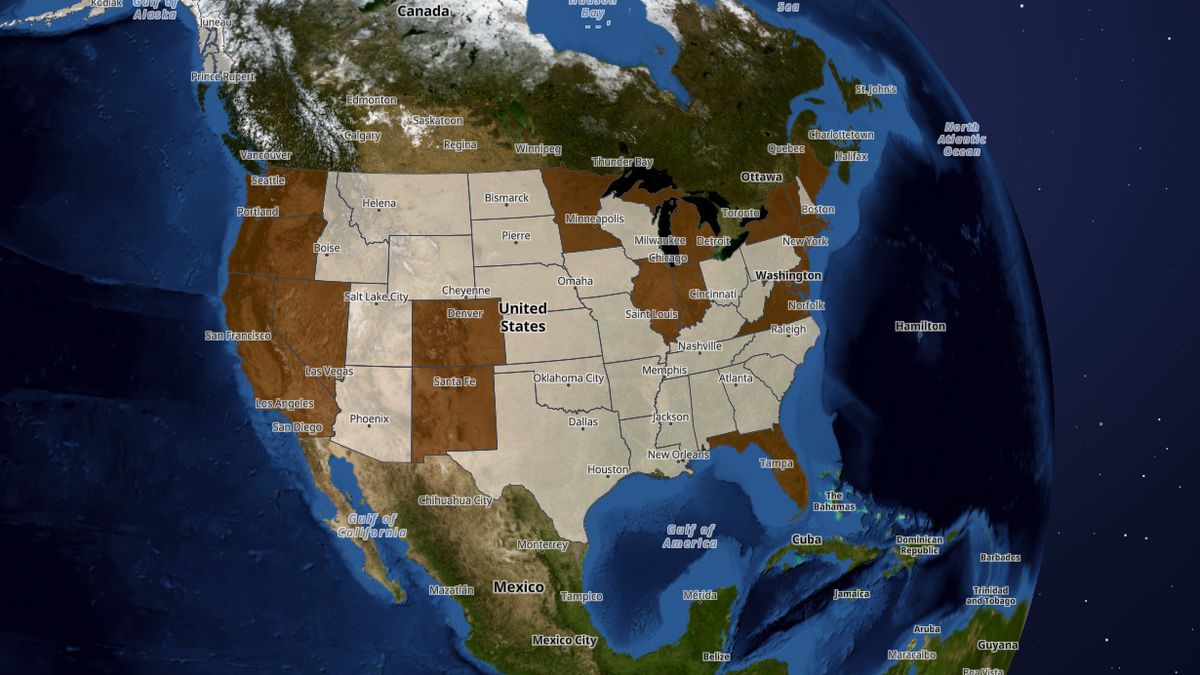 Open the live map →
🚩States by category
⚖️Every state
| State | Law | What it says |
|---|---|---|
| Alabama | No red flag law | No |
| Alaska | No red flag law | No |
| Arizona | No red flag law | No |
| Arkansas | No red flag law | No |
| California | Red flag law | Yes (gun violence restraining order); enacted 2014 |
| Colorado | Red flag law | Yes; enacted 2019 |
| Connecticut | Red flag law | Yes (risk warrant / risk protection order); enacted 1999 |
| Delaware | Red flag law | Yes (lethal violence protective order); enacted 2018 |
| District of Columbia | Red flag law | Yes; enacted 2018 |
| Florida | Red flag law | Yes (risk protection order); enacted 2018 |
| Georgia | No red flag law | No |
| Hawaii | Red flag law | Yes (gun violence protective order); enacted 2019 |
| Idaho | No red flag law | No |
| Illinois | Red flag law | Yes (firearms restraining order); enacted 2018 |
| Indiana | Red flag law | Yes; enacted 2005 |
| Iowa | No red flag law | No |
| Kansas | No red flag law | No |
| Kentucky | No red flag law | No |
| Louisiana | No red flag law | No |
| Maine | Red flag law | Yes (extreme risk protection order, from 2026; earlier 'yellow flag' protective custody law from 2020); enacted 2025 |
| Maryland | Red flag law | Yes; enacted 2018 |
| Massachusetts | Red flag law | Yes; enacted 2018 |
| Michigan | Red flag law | Yes; enacted 2023 |
| Minnesota | Red flag law | Yes; enacted 2023 |
| Mississippi | No red flag law | No |
| Missouri | No red flag law | No |
| Montana | No red flag law | No |
| Nebraska | No red flag law | No |
| Nevada | Red flag law | Yes (extreme risk protection order); enacted 2019 |
| New Hampshire | No red flag law | No |
| New Jersey | Red flag law | Yes (extreme risk protective order); enacted 2018 |
| New Mexico | Red flag law | Yes; enacted 2020 |
| New York | Red flag law | Yes (extreme risk protection order); enacted 2019 |
| North Carolina | No red flag law | No |
| North Dakota | No red flag law | No |
| Ohio | No red flag law | No |
| Oklahoma | No red flag law | No; state law bars red flag orders |
| Oregon | Red flag law | Yes (extreme risk protection order); enacted 2017 |
| Pennsylvania | No red flag law | No |
| Rhode Island | Red flag law | Yes (extreme risk protection order); enacted 2018 |
| South Carolina | No red flag law | No |
| South Dakota | No red flag law | No |
| Tennessee | No red flag law | No |
| Texas | No red flag law | No |
| Utah | No red flag law | No |
| Vermont | Red flag law | Yes (extreme risk protection order); enacted 2018 |
| Virginia | Red flag law | Yes (substantial risk order); enacted 2020 |
| Washington | Red flag law | Yes (extreme risk protection order); enacted 2016 |
| West Virginia | No red flag law | No |
| Wisconsin | No red flag law | No |
| Wyoming | No red flag law | No |
🔎About this data
An extreme risk protection order ('red flag') law lets police and, in most states, family members ask a court to temporarily remove guns from a person found to be a danger to themselves or others. Oklahoma has a law barring such orders.
Source: State statutes (official legislature code sites), state police / attorney general pages and court orders; citation for every item is in the popup. Compiled by Map the Block, law as of 2026-10-06
Coverage: All 50 states and DC
How it was checked: Drafted from the statutes, then checked against official pages fetched for this layer (state code sites, state police and county pages, court orders, bill-status pages): 80 automated text checks passed across 29 states and 12 more items were settled by reading the page; 7 draft values were corrected that way (WV permitless age, CT long-gun age, MN waiting period, NM injunction scope, ND and MT carry rules, WA training requirement). All states were also compared item by item with a separate summary table (283 comparisons): 3 differences remain, each explained in the report. RAND's database and NCSL refused or block AI crawlers, so neither was used; CA, HI and DC code sites refused or block us, so those states rest on statute citations plus the table cross-check. Law as of 2026-10-06.
💬Questions and answers
Red flag law: how many states?
As of October 6, 2026: No red flag law: 28 states; Red flag law: 22 states and DC.
No red flag law: which states?
28 states: Alabama, Alaska, Arizona, Arkansas, Georgia, Idaho, Iowa, Kansas, Kentucky, Louisiana, Mississippi, Missouri, Montana, Nebraska, New Hampshire, North Carolina, North Dakota, Ohio, Oklahoma, Pennsylvania, South Carolina, South Dakota, Tennessee, Texas, Utah, West Virginia, Wisconsin, Wyoming.
Red flag law: which states?
22 states and DC: California, Colorado, Connecticut, Delaware, District of Columbia, Florida, Hawaii, Illinois, Indiana, Maine, Maryland, Massachusetts, Michigan, Minnesota, Nevada, New Jersey, New Mexico, New York, Oregon, Rhode Island, Vermont, Virginia, Washington.
Where does this data come from?
State statutes (official legislature code sites), state police / attorney general pages and court orders; citation for every item is in the popup. Compiled by Map the Block, law as of 2026-10-06. Coverage: All 50 states and DC.
Is the map free to use?
Yes. Map the Block is free, with no ads or paywall. You may quote figures with credit to Map the Block (maptheblock.com); for bulk or commercial use there is a Data API.
🧭More maps like this
Keep the map free. Map the Block has no ads and no paywall. Donations pay for the server and the data work.
Numbers computed from the live map data on October 18, 2026. Free to quote with credit to “Map the Block (maptheblock.com)”; see reuse terms.